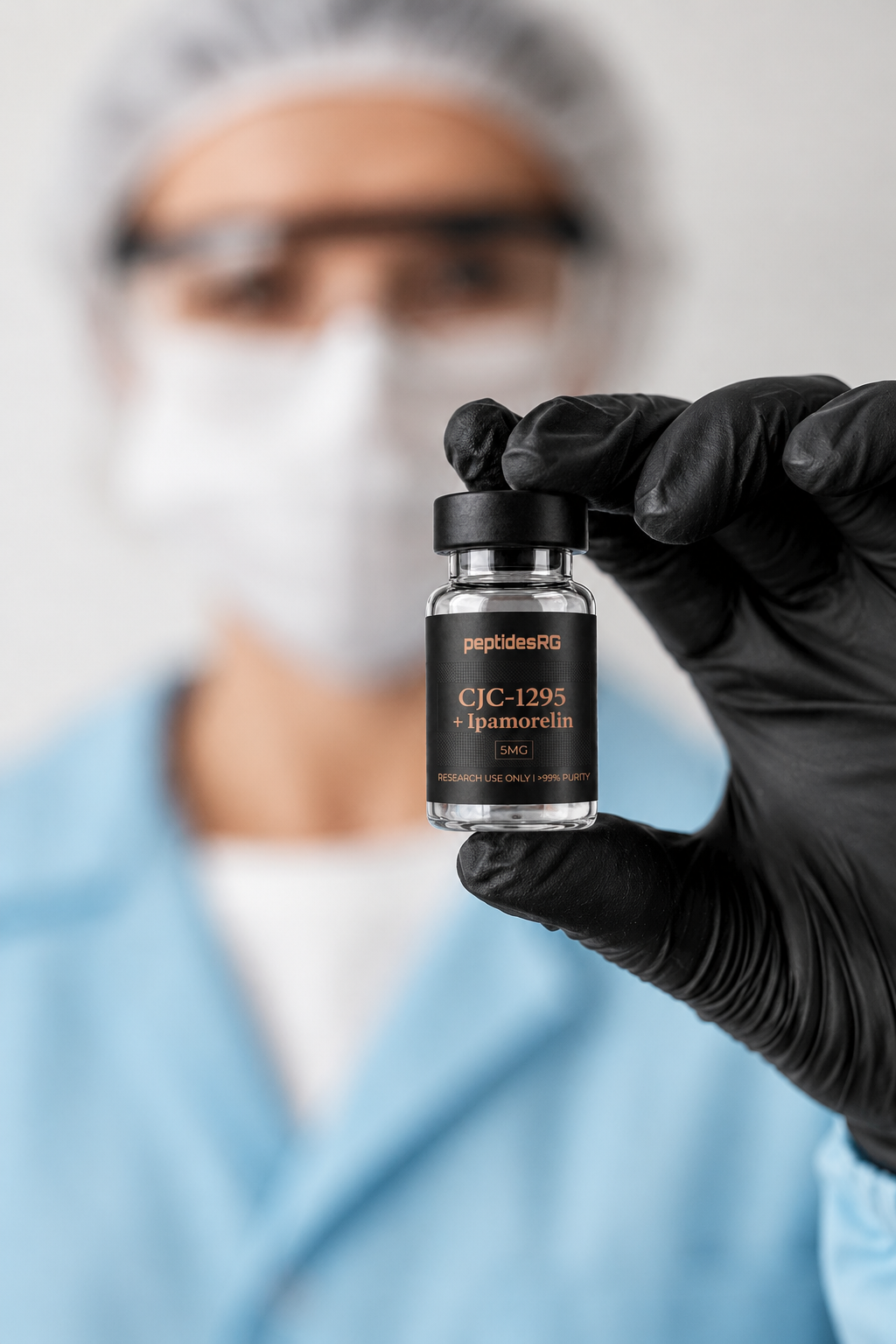
Metabolic & Incretin Pathways

This collection features highly purified peptide analogues and structural mimetics formulated for the in-vitro investigation of metabolic transcription and energetic homeostasis. These compounds are utilized by researchers to study incretin receptor binding affinities—specifically targeting GLP-1, GIP, and Glucagon receptors—as well as amylin pathways and isolated lipid oxidation mechanisms.

All products are provided strictly as chemical reagents for cellular assays and animal-model research.

5-amino-1mq

A small molecule engineered as a selective, membrane-permeable inhibitor of nicotinamide N-methyltransferase (NNMT). Utilized to investigate intracellular NAD+ salvage pathways and cellular energy metabolism.

Tirzepatide

A synthetic peptide engineered as a dual GIP and GLP-1 receptor agonist. Utilized to investigate synergistic incretin receptor binding and its effects on intracellular cAMP production.

Semaglutide

A synthetic peptide engineered as a selective GLP-1 receptor agonist. Utilized to investigate incretin pathway activation, delayed gastric emptying models, and beta-cell function in preclinical studies.

Retatrutide

A highly complex synthetic peptide acting as a triple agonist of the GIP, GLP-1, and Glucagon (GCGR) receptors. Utilized to investigate multi-pathway metabolic regulation and energy expenditure models.

Cagrilintide

A synthetic, long-acting amylin analogue. Utilized to investigate calcitonin and amylin receptor agonism, evaluating its role in satiety signaling and postprandial glycemic control mechanisms.

RetaCagri (Retatrutide + Cagrilintide)

A proprietary co-formulation combining a triple GIP/GLP-1/GCGR agonist with a long-acting amylin analogue. Utilized to investigate profound, multi-receptor metabolic signaling and energy homeostasis.

CagriSema (Cagrilintide + Semaglutide)

A proprietary co-formulation combining a long-acting amylin analogue and a selective GLP- 1 receptor agonist. Utilized to investigate the synergistic binding effects of dual-pathway metabolic intervention.

AOD-9604:

A modified C-terminal fragment of human growth hormone (hGH 177-191). Utilized to investigate localized lipolytic activity and metabolic signaling without influencing IGF-1 production.

Research Use Only Acknowledgment

Welcome to PeptidesRG. Our catalog consists strictly of highly purified chemical reagents intended exclusively for in-vitro laboratory research and development.

0
    0
    Your Cart
    Your cart is emptyReturn to Shop